Falling Film Evaporator Manufacturer for Efficient ZLD Applications
Shail Vac Engineers designs and manufactures Falling Film Evaporators for process industries that need efficient heat transfer, shorter residence time, reliable concentration, and integration with Zero Liquid Discharge systems.
Our falling film systems are engineered around stream behaviour, temperature sensitivity, flow distribution, recovery targets, utility consumption and long-term plant operation.
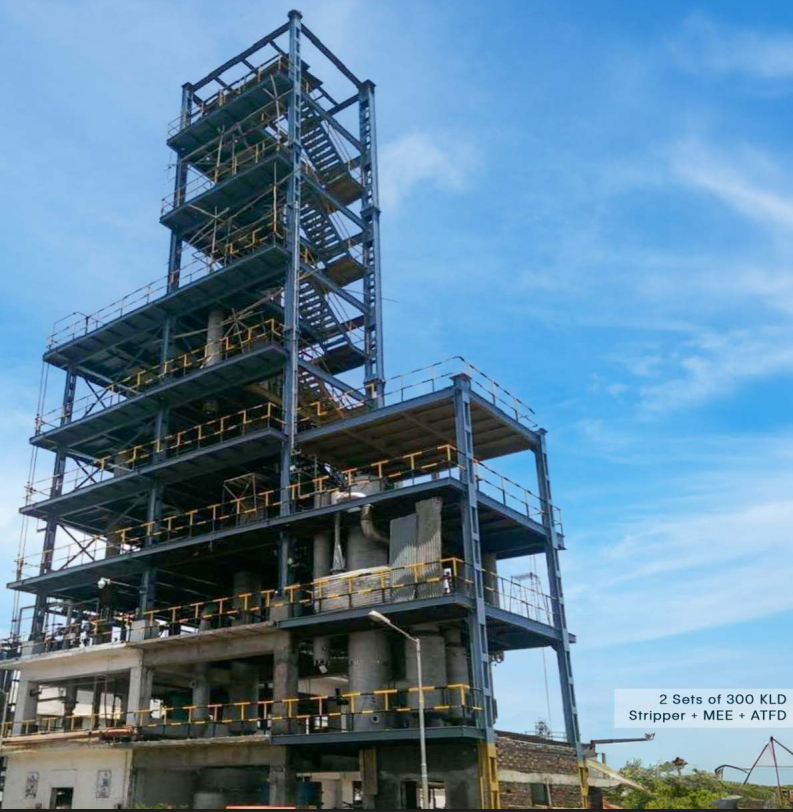 Falling Film Evaporator for efficient evaporation & ZLD
When Your Process Needs Fast Evaporation with Controlled Heat Exposure
Many industrial streams require evaporation, but not every stream can handle long exposure to high temperatures. In pharmaceutical, chemical, food, dairy and process applications, product quality, effluent behaviour, scaling risk and energy consumption can all be affected by the wrong evaporator design.
Falling Film Evaporators are used where efficient heat transfer, shorter contact time and controlled evaporation are important. Shail Vac Engineers designs falling film systems to help industries concentrate streams, recover water, reduce liquid waste and maintain better operating stability in evaporation-heavy plants.
Common Challenges We Help Solve
What is a Falling Film Evaporator?
A Falling Film Evaporator is an industrial evaporation system where the liquid feed enters from the top and flows downward through heated tubes as a thin film.
In simple terms: the liquid flows as a thin film, giving better heat transfer and shorter contact time for efficient, controlled evaporation.
How the Thin Film Works
As the liquid moves downward by gravity, heat is transferred through the tube surface, and part of the liquid evaporates. The generated vapour flows along with the liquid and is separated from the concentrated product at the bottom.
Because the liquid flows as a thin film, the system offers better heat transfer and shorter product contact time compared to many conventional evaporation arrangements.
Where It Fits
This makes Falling Film Evaporators useful for applications where efficient evaporation and controlled heat exposure are important.
How a Falling Film Evaporator Works
Feed is distributed evenly at the top of the calandria and flows down the heated tubes as a thin film. Heat transferred through the tube wall evaporates part of the film, vapour and liquid travel co-currently, and the two are separated at the bottom, with condensate recovered and concentrate moving downstream for ZLD.
Labelled working-principle diagram, top-fed falling film evaporator with co-current vapour flow, separation, condensate recovery and ZLD integration
Where Falling Film Evaporators Fit in a ZLD System
Falling Film Evaporators can be used as part of a Multiple Effect Evaporator system, MVR-based evaporation system or an integrated Zero Liquid Discharge plant. They are generally suitable when the process needs:
Shail Vac Engineers evaluates the stream before selecting a falling film configuration. The system is designed based on flow rate, viscosity, salts, solids, scaling tendency, temperature requirement and recovery target.
Key Benefits of Falling Film Evaporators
The thin liquid film allows better contact with the heating surface, helping improve evaporation efficiency.
The liquid passes through the system quickly, making it suitable for streams where prolonged heat exposure should be avoided.
Falling Film Evaporators operate with relatively lower liquid volume inside the system, which supports faster startup and controlled operation.
Shorter contact time and efficient evaporation make falling film systems useful for heat-sensitive process applications.
When integrated with MEE or MVR systems, falling film evaporators can support better steam economy and reduced operating cost.
The design supports faster startup and simpler cleaning compared to many high-hold-up evaporation systems.
Falling Film Evaporators can be integrated into ZLD systems for water recovery, wastewater concentration and downstream salt or solid handling.
Applications of Falling Film Evaporators
Falling Film Evaporators are used where efficient evaporation, controlled heat exposure and faster concentration are required. Common applications include:
Each industry has different process chemistry and operating requirements. That is why every falling film evaporator is designed after evaluating the stream and site conditions.
Why Choose Shail Vac Engineers for Falling Film Evaporators?
Since 1987, Shail Vac Engineers has worked with industrial evaporation, vacuum and wastewater recovery systems for process industries.
Our experience across evaporation systems helps us design practical solutions for different process streams, capacities and recovery targets.
We study flow rate, TDS, COD, salts, viscosity, scaling tendency, heat sensitivity and utility cost before recommending a falling film evaporator.
Our in-house engineering and fabrication capabilities help maintain better control over design accuracy, quality and project delivery.
Shail Vac Engineers can integrate Falling Film Evaporators with MEE systems, MVR evaporators, ATFD, dryers and complete ZLD systems.
From engineering and manufacturing to commissioning and long-term O&M, Shail Vac Engineers supports the full lifecycle of the system.
How We Design Falling Film Evaporators
A falling film evaporator must be engineered on the actual stream and its distribution behaviour, not on capacity alone. We work through a defined sequence, and stay involved through commissioning and long-term operation.
Outcomes That Matter to Process Plants
Thin film flow helps improve heat transfer and supports efficient evaporation.
Shorter liquid contact time helps protect streams where prolonged heating can affect quality or performance.
When integrated with ZLD or MEE systems, falling film evaporators support water recovery from industrial effluent.
With proper multi-effect or MVR integration, falling film systems can help reduce steam consumption.
A process-specific design helps support continuous evaporation performance under real plant conditions.
Proper distribution, controlled operation and O&M support help reduce unnecessary downtime and maintenance issues.
When Should Your Plant Consider a Falling Film Evaporator?
You may need a Falling Film Evaporator if your plant requires:
If your existing evaporation system is slow, energy-heavy or not suitable for temperature-sensitive streams, a Falling Film Evaporator can be evaluated as a practical solution.
Looking for a Falling Film Evaporator for Your Process?
Share your stream details, flow rate, temperature requirement, TDS, COD, recovery target and utility availability with our engineering team. Shail Vac Engineers will evaluate your process and recommend the right falling film evaporator configuration based on your plant requirements. Whether you need a standalone falling film evaporator, MEE integration, MVR integration, ZLD support or long-term O&M, our team can help you plan the next step.
Frequently Asked Questions
A Falling Film Evaporator is used to evaporate and concentrate liquid streams by allowing the liquid to flow as a thin film through heated tubes. It is used in wastewater recovery, process concentration and ZLD systems.
The liquid feed enters from the top, forms a thin film inside the heating tubes and flows downward by gravity. Heat evaporates part of the liquid, and the vapour is separated from the concentrated product at the bottom.
Falling Film Evaporators are used in pharmaceuticals, chemicals, food and dairy, dyes, textiles, agrochemicals, refineries, petrochemicals and other process industries.
Yes. Falling Film Evaporators are commonly used where short residence time and controlled heat exposure are required.
Yes. Falling Film Evaporators can be integrated with MEE, MVR, ATFD and other ZLD systems for wastewater concentration and water recovery.
Falling Film Evaporators allow liquid to flow downward as a thin film and are suitable for efficient heat transfer and shorter residence time. Forced Circulation Evaporators use external circulation and are generally preferred for high-scaling, crystallising, or difficult streams.
Yes. Shail Vac Engineers designs Falling Film Evaporators based on stream characteristics, flow rate, temperature, TDS, COD, salts, viscosity, utility cost and recovery target.
Yes. Shail Vac Engineers provides engineering, manufacturing, installation, commissioning, EPC support and O&M services for evaporation and ZLD systems.