Multiple Effect Evaporator Manufacturer in India for ZLD Applications
Shail Vac Engineers designs and manufactures Multiple Effect Evaporators for process industries that need efficient concentration, water recovery, reduced steam consumption, and reliable integration with Zero Liquid Discharge systems.
Our MEE systems are engineered around effluent chemistry, solids content, scaling risk, temperature sensitivity, recovery targets and long-term operating economics.
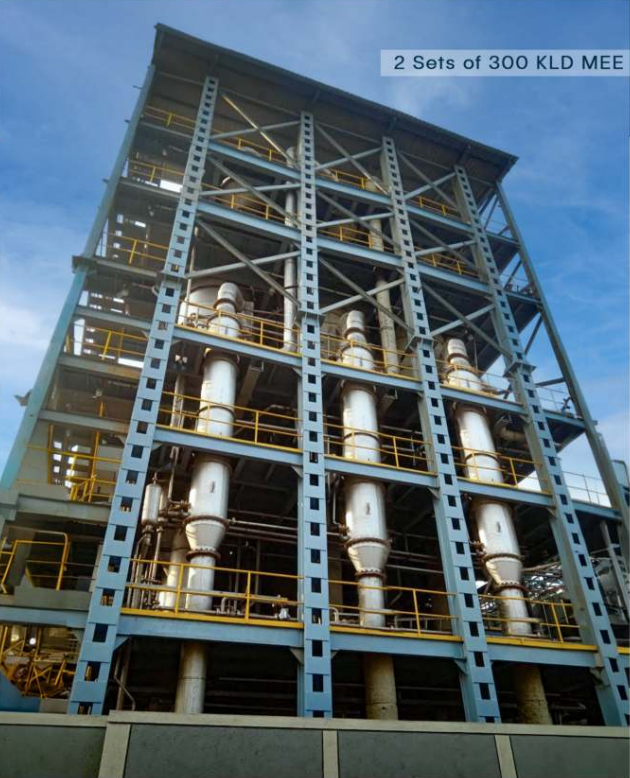 Multiple Effect Evaporator system for ZLD integration
When Evaporation Performance Directly Affects Plant Reliability
Industrial plants often deal with wastewater and process streams that cannot be handled through basic treatment alone. High TDS, dissolved salts, high organic load, variable effluent quality and strict discharge norms make evaporation a critical part of the treatment process.
At the same time, evaporation-heavy plants face practical operating challenges such as high steam consumption, scaling, fouling, product degradation, inconsistent concentration and downtime. Shail Vac Engineers designs Multiple Effect Evaporators to help industries concentrate difficult streams, recover reusable water and support Zero Liquid Discharge performance with better energy efficiency.
Common Challenges We Help Solve
What is a Multiple Effect Evaporator?
A Multiple Effect Evaporator is an industrial evaporation system that uses steam more efficiently by reusing vapour from one effect as the heating medium for the next effect.
In simple terms: A Multiple Effect Evaporator helps plants evaporate more with less steam.
Single Effect vs Multiple Effect
In a single-effect evaporator, fresh steam is used for one stage of evaporation. In a Multiple Effect Evaporator, the vapour generated in one vessel is passed to the next vessel, reducing the need for fresh steam at every stage.
This makes MEE a practical and widely used solution for industries that need to concentrate wastewater, recover water and reduce evaporation operating cost.
Where It Fits
MEE is a core technology for wastewater concentration and water recovery, and is commonly used as part of Zero Liquid Discharge systems across process industries.
How a Multiple Effect Evaporator Works
Steam is supplied to the first effect, and the vapour it generates becomes the heating medium for the next effect. As this repeats across effects, the stream is concentrated using far less fresh steam, while recovered condensate and concentrated reject feed into downstream recovery and drying.
Labelled working-principle diagram, triple-effect MEE with vapour reuse, condensate recovery and ZLD integration
MEE Systems Engineered Around Your Process
Every industrial stream behaves differently. That is why Shail Vac Engineers designs Multiple Effect Evaporators based on actual process conditions, not standard capacity alone. Our MEE systems can be configured with:
Suitable for heat-sensitive streams and applications where shorter residence time is required.
Suitable for high scaling, high TDS and crystallising streams where controlled circulation is important.
Used when concentrated reject needs further drying for salt or solid recovery.
Designed to improve energy efficiency and reduce steam consumption in evaporation-heavy operations.
Designed based on flow rate, TDS, COD, salts, temperature, utility availability and recovery target.
Key Benefits of Multiple Effect Evaporators
By reusing vapour across multiple effects, MEE systems reduce the dependency on fresh steam compared to single-stage evaporation.
MEE systems support water recovery from industrial wastewater streams and help reduce dependency on fresh water sources.
Multiple Effect Evaporators are a core part of Zero Liquid Discharge systems where wastewater needs to be concentrated before final drying or salt recovery.
MEE systems can be designed for high-TDS, high-COD, chemical, pharmaceutical, dye, textile and process industry wastewater.
Efficient steam utilisation, heat recovery and proper system design help reduce lifetime operating cost.
Each system is engineered based on effluent chemistry, solids content, scaling tendency, temperature requirement and plant operating conditions.
With proper design, fabrication, commissioning and O&M support, MEE systems help industries maintain stable evaporation performance over time.
Applications of Multiple Effect Evaporators
Multiple Effect Evaporators are used in industries where liquid streams need to be concentrated, water needs to be recovered, or wastewater volume needs to be reduced before final treatment. Common applications include:
Each industry has different effluent chemistry, so every MEE system is evaluated and engineered around the actual process requirement.
Why Choose Shail Vac Engineers for MEE Systems?
Since 1987, Shail Vac Engineers has worked with process industries that require reliable evaporation, vacuum and wastewater recovery systems.
Our experience across evaporation technologies helps us design systems for different effluent conditions, capacities and operating requirements.
We study the stream before recommending the system. TDS, COD, salts, scaling risk, steam availability, temperature sensitivity and recovery target are considered before design.
Our engineering and fabrication capabilities help maintain better control over technical accuracy, quality and delivery schedules.
We do not look at MEE as a standalone piece of equipment only. We design it as part of the complete wastewater recovery and Zero Liquid Discharge chain.
From design and manufacturing to commissioning and long-term operations support, we help clients maintain plant performance beyond installation.
How We Design Multiple Effect Evaporators
An MEE must be engineered on the actual stream, not on capacity alone. We work through a defined sequence before anything is manufactured, and stay involved through commissioning and long-term operation.
Outcomes That Matter to Process Plants
MEE systems support the recovery of water from wastewater streams and help reduce liquid waste volume.
By reusing vapour across multiple effects, the system improves steam utilisation compared to single-effect evaporation.
When integrated with ZLD and downstream drying systems, MEE helps industries move towards zero liquid discharge requirements.
By concentrating wastewater, MEE reduces the volume that needs further handling or disposal.
A process-specific design helps reduce performance gaps, scaling risk and operational instability.
Proper system selection, heat integration and O&M support help improve plant economics over time.
When Should Your Plant Consider a Multiple Effect Evaporator?
You may need a Multiple Effect Evaporator if your plant is facing:
If your current system is consuming too much steam, failing to meet recovery targets or struggling with changing effluent characteristics, an MEE system can be evaluated for better performance.
Looking for a Reliable MEE System for Your Plant?
Share your effluent details, flow rate, TDS, COD, recovery target and utility availability with our engineering team. Shail Vac Engineers will evaluate your process requirement and recommend the right Multiple Effect Evaporator configuration for your plant. Whether you need a new MEE system, ZLD integration, MVR upgrade, ATFD integration or long-term O&M support, our team can help you plan the next step.
Frequently Asked Questions
A Multiple Effect Evaporator is used to concentrate wastewater or process streams by evaporating water and recovering condensate. It is commonly used in ZLD plants and industrial wastewater recovery systems.
An MEE system reuses vapour generated in one effect as the heating medium for the next effect. This reduces the need for fresh steam at every stage and improves steam economy.
Multiple Effect Evaporators are used in pharmaceuticals, chemicals, dyes, textiles, agro chemicals, refineries, petrochemicals, food and dairy, speciality chemicals and other process industries.
Yes. MEE is one of the core technologies used in ZLD plants. It concentrates wastewater and helps recover water before the remaining reject is sent for drying or salt recovery.
MEE uses multiple evaporation effects to reuse vapour and reduce steam consumption. MVR uses mechanical vapour recompression to compress vapour and reuse it as a heating medium, which can further reduce steam dependency in suitable applications.
Yes. Shail Vac Engineers designs MEE systems based on effluent chemistry, flow rate, TDS, COD, salts, scaling risk, utility cost and recovery target.
Yes. Shail Vac Engineers provides engineering, manufacturing, installation, commissioning and EPC support for MEE and integrated ZLD systems.
Yes. Shail Vac Engineers provides O&M support for evaporation systems, ZLD plants and related industrial systems after commissioning.