

Steam Jet Ejector Manufacturer in India for Process Industries
Shail Vac Engineers designs and manufactures Steam Jet Ejectors for process industries that need reliable vacuum generation, non-condensable load handling and stable operation under demanding plant conditions.
Our steam jet ejector systems are engineered around process pressure, vapour load, suction requirement, utility availability, material compatibility and long-term operating reliability.
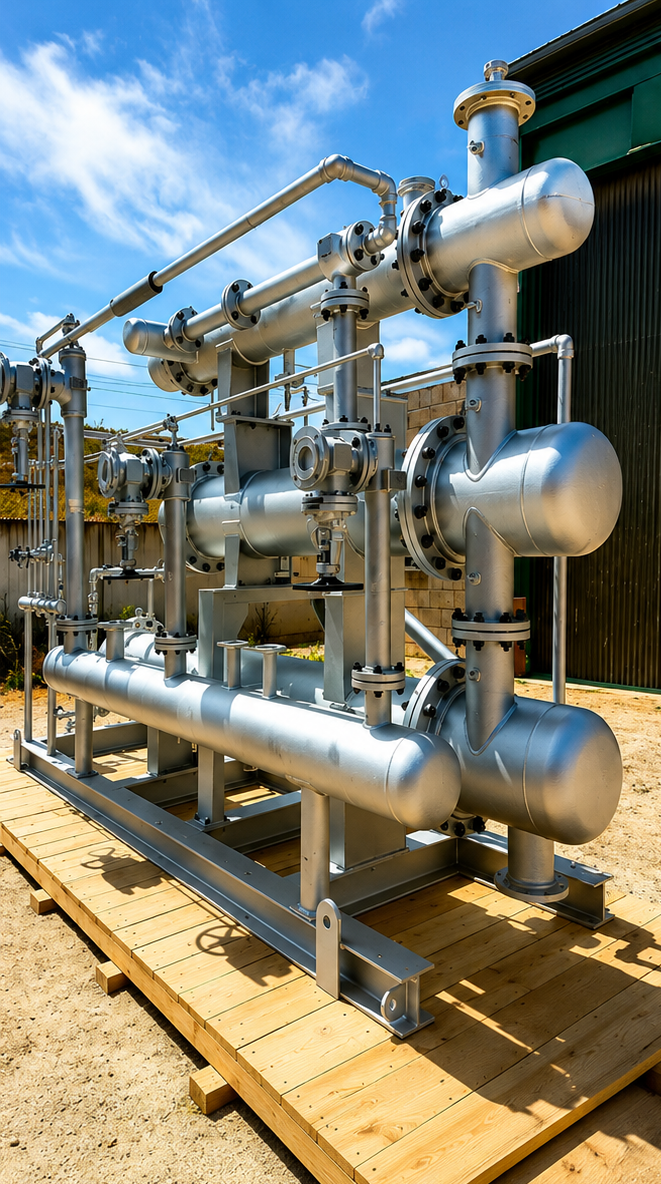 Skid-mounted multi-stage ejector vacuum system
When Vacuum Stability Directly Affects Process Performance
In many process plants, vacuum is not just a utility requirement. It directly affects evaporation, distillation, drying, concentration, reaction control and product quality. Unstable vacuum can lead to poor process efficiency, higher downtime, inconsistent output and increased operating pressure on the plant team.
Steam Jet Ejectors are widely used where plants need rugged, reliable and low-maintenance vacuum generation for chemical, pharmaceutical, refinery, food processing and other process applications. Shail Vac Engineers designs Steam Jet Ejectors to support stable vacuum performance in real industrial operating conditions.
Common Challenges We Help Solve
What is a Steam Jet Ejector?
A Steam Jet Ejector is a vacuum-generating device that uses high-pressure steam as the motive fluid.
In simple terms: A Steam Jet Ejector uses steam energy to pull vapour or gas from a process and create a vacuum.
Working Principle
The steam passes through a nozzle at high velocity and creates a low-pressure zone inside the suction chamber. This low-pressure zone helps entrain vapour or gas from the process.
The mixture of motive steam and suction vapour then passes through the diffuser, where pressure recovery takes place.
Applications
Steam Jet Ejectors are commonly used in industries where reliable vacuum generation is required without complex moving parts.
How a Steam Jet Ejector Works
High-pressure steam enters the ejector through the motive nozzle.
The steam expands through the nozzle and reaches a very high velocity.
The high-velocity steam creates a low-pressure zone in the suction chamber.
Process vapour or gas is drawn into the suction chamber due to the vacuum effect.
The motive steam and entrained vapour mix together inside the ejector body.
The mixture passes through the diffuser, where velocity is converted into pressure.
The discharge can be sent to a condenser, separator or downstream process system depending on the application.
Where Steam Jet Ejectors Fit in Vacuum Systems
Steam Jet Ejectors are used in industrial vacuum systems where process reliability, rugged construction and stable vacuum generation are important.
Shail Vac Engineers evaluates the process before recommending the ejector configuration. The system is designed based on suction pressure, vapour load, motive steam pressure, discharge condition, cooling water availability, material requirement and process application.
Key Benefits of Steam Jet Ejectors
Applications of Steam Jet Ejectors
Steam Jet Ejectors are used across process industries where reliable vacuum is needed for production, separation, concentration or recovery.
Industries That Use Steam Jet Ejectors
Shail Vac Engineers designs Steam Jet Ejectors for industries where vacuum reliability and process stability are important.
Each industry has different process pressure, vapour load, material requirements, and operating conditions. That is why every steam jet ejector system is designed around the actual process requirement.
Why Choose Shail Vac Engineers for Steam Jet Ejectors?
Since 1987, Shail Vac Engineers has worked with industrial vacuum systems and ejector-based solutions for process industries.
Our experience across vacuum applications helps us design practical systems for different industries, capacities and process requirements.
Shail Vac Engineers supports chemical, pharmaceutical, food processing, refinery and other process industry clients with engineered vacuum systems.
We study suction pressure, vapour load, motive steam condition, discharge pressure, operating temperature and material compatibility before designing the ejector.
Our engineering and manufacturing capabilities help maintain better control over technical accuracy, quality and delivery timelines.
Shail Vac Engineers can design Steam Jet Ejectors as part of complete vacuum systems with condensers, separators, piping, instrumentation and process integration.
From design and manufacturing to commissioning and long-term support, Shail Vac Engineers supports the full lifecycle of the vacuum system.
How We Design Steam Jet Ejectors
A jet ejector must be selected on the actual process, not the vacuum level alone. We work through six steps before anything is manufactured.
Outcomes That Matter to Process Plants
Steam Jet Ejectors help maintain vacuum levels required for process continuity and product consistency.
No moving parts help reduce mechanical failure points and simplify maintenance planning.
Proper ejector design supports evaporation, distillation, drying and chemical process applications.
With suitable material selection, the system can handle challenging industrial vapours and process streams.
A rugged ejector system helps plants reduce downtime risk and support continuous operation.
Steam Jet Ejectors can be integrated with condensers, separators and complete vacuum packages based on plant requirements.
Steam Jet Ejector vs Liquid Jet Ejector
Steam Jet Ejectors use high-pressure steam as the motive fluid, while Liquid Jet Ejectors use liquid, generally water, as the motive fluid.
In simple terms: Steam Jet Ejectors are often preferred when higher non-condensable load handling and deeper vacuum performance are required.
Applications
Liquid Jet Ejectors are useful in applications where liquid motive systems are suitable, and process conditions do not require the same steam-based performance.
The right selection depends on vacuum level, load, motive utility, process vapour, energy cost and plant operating conditions.
Shail Vac Engineers evaluates the application before recommending steam jet, liquid jet or combined ejector systems.
When Should Your Plant Consider a Steam Jet Ejector?
You may need a Steam Jet Ejector if your plant requires:
If your current vacuum system is unstable, maintenance-heavy or not designed for your actual process load, a Steam Jet Ejector can be evaluated as a reliable solution.
Looking for a Steam Jet Ejector for Your Process?
Share your suction pressure, vapour load, motive steam pressure, process temperature, material requirement and application details with our engineering team. Shail Vac Engineers will evaluate your requirement and recommend the right Steam Jet Ejector configuration for your plant. Whether you need a single ejector, multi-stage vacuum system, steam jet and liquid jet combination, complete vacuum package or long-term support, our team can help you plan the next step.
Frequently asked questions
A Steam Jet Ejector is used to create a vacuum in industrial processes such as evaporation, distillation, drying, solvent recovery, chemical processing and refinery applications.
A Steam Jet Ejector uses high-pressure steam through a nozzle to create a low-pressure zone. This draws vapour or gas from the process and helps generate a vacuum.
Steam Jet Ejectors are used in pharmaceuticals, chemicals, dyes, refineries, petrochemicals, food processing, edible oil, agro chemicals and other process industries.
Steam Jet Ejectors have no moving parts, require low maintenance, offer rugged operation, handle process vapours and can be designed for corrosive or demanding applications.
Yes. Steam Jet Ejectors can handle non-condensable loads and are often preferred where higher non-condensable load handling is required.
Steam Jet Ejectors use steam as the motive fluid, while Liquid Jet Ejectors use liquid, generally water. Steam Jet Ejectors are usually preferred for higher non-condensable load handling and deeper vacuum applications.
Yes. Shail Vac Engineers designs Steam Jet Ejectors based on suction pressure, vapour load, motive steam condition, process temperature, material compatibility and application requirement.
Yes. Shail Vac Engineers provides Steam Jet Ejectors as standalone equipment or as part of complete vacuum systems with condensers, separators, piping, instrumentation and commissioning support.